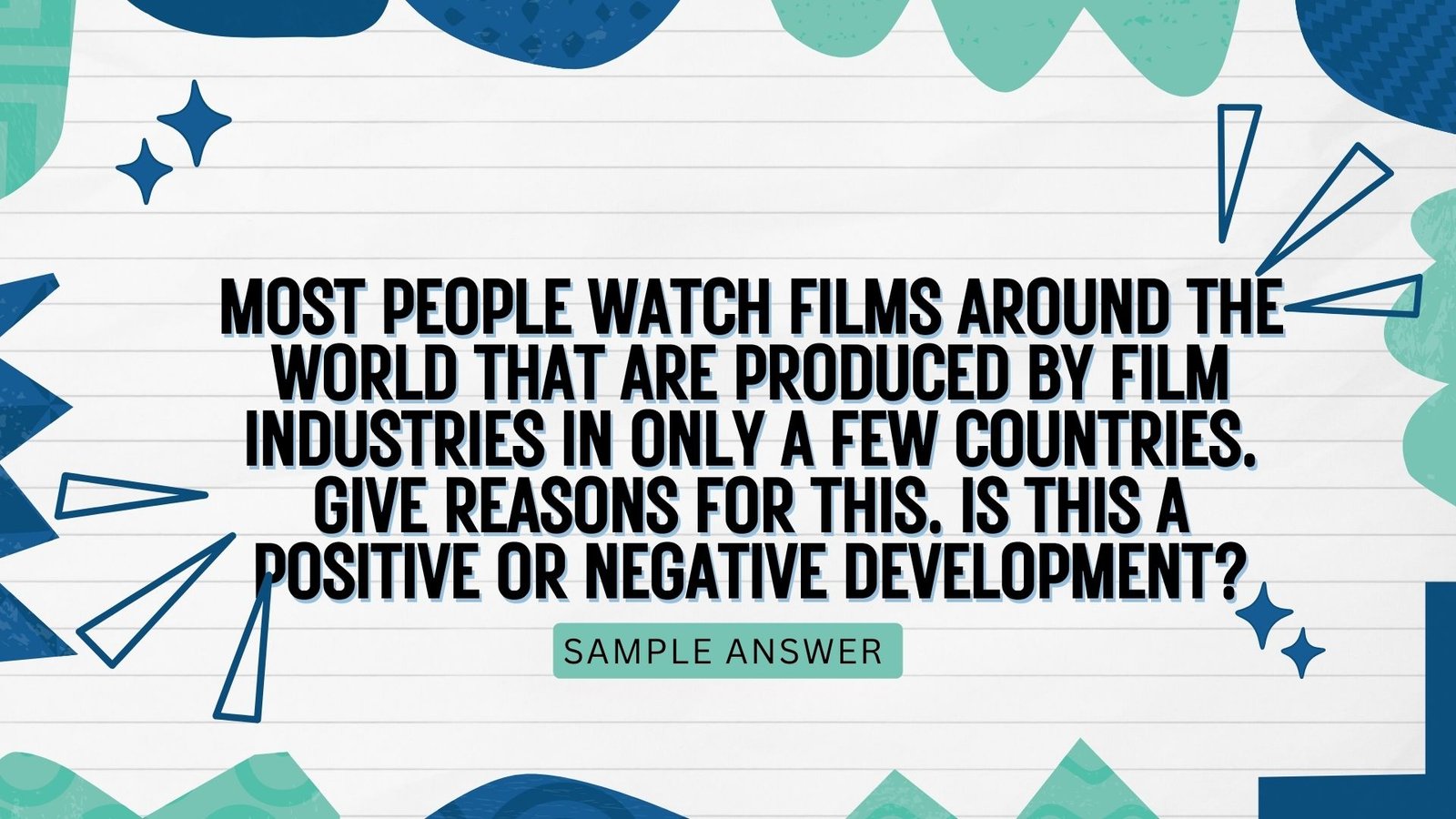
In today’s globalised world, it is noticeable that the majority of films watched worldwide are produced by a handful of countries, particularly dominant film industries. This trend can be attributed to several factors, and in my opinion, it is largely a negative development despite a few advantages.
One primary reason behind this phenomenon is the immense financial resources and technological superiority of major film industries such as Hollywood. These industries invest heavily in high-quality production, advanced visual effects, and global marketing campaigns, making their films more appealing to international audiences. Additionally, the widespread availability of streaming platforms has further amplified the reach of such films, allowing them to penetrate even remote markets. As a result, films from smaller industries often struggle to compete on a global scale.
However, this dominance can have several detrimental effects. Most notably, it can lead to cultural homogenisation, where local traditions, languages, and storytelling styles are overshadowed by foreign content. This may gradually erode cultural identity and reduce the diversity of global cinema. Furthermore, local film industries may face financial constraints and limited audience engagement, ultimately hindering their growth and creativity. Although audiences may benefit from high-quality entertainment, the long-term cultural consequences cannot be overlooked.
In conclusion, while the global popularity of films from a few countries can be explained by their superior resources and accessibility, I believe this is largely a negative trend. It is essential to promote and support local film industries to preserve cultural diversity and ensure a more balanced global entertainment landscape.
High-Level Vocabulary & Collocations
- globalised world
- dominant film industries
- financial resources
- technological superiority
- global marketing campaigns
- widespread availability
- penetrate markets
- cultural homogenisation
- erode cultural identity
- diversity of cinema
- financial constraints
- audience engagement
- balanced entertainment landscape