SAMPLE ANSWER
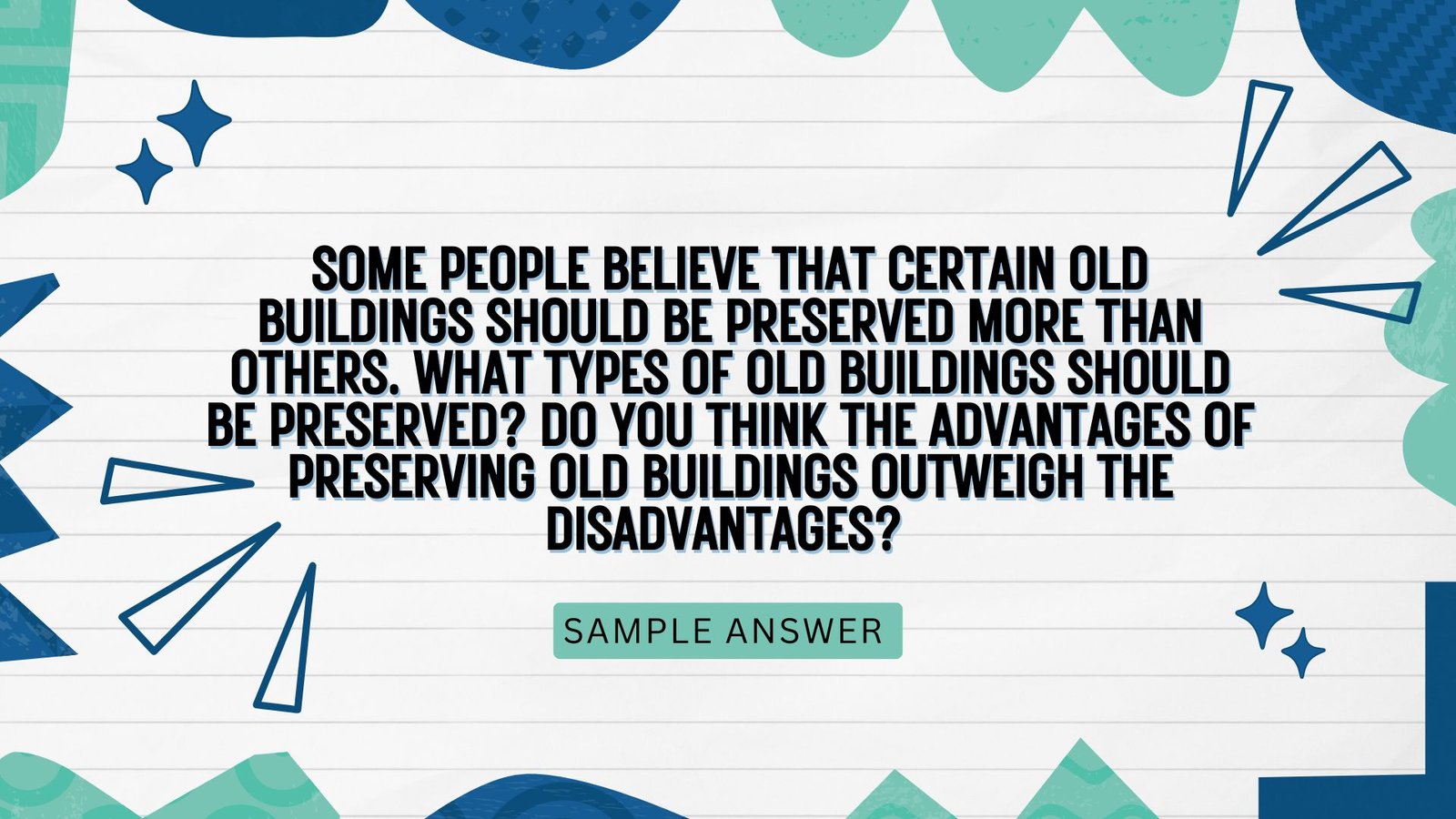
Many people believe that not all old buildings deserve the same level of protection and that some should be prioritised over others. In my opinion, structures with historical, cultural, or architectural significance should be preserved, and the benefits of protecting such buildings generally outweigh the drawbacks.
To begin with, buildings that represent a country’s heritage should be given priority. This includes historic landmarks, religious sites, and structures associated with important events or figures. Preserving these buildings helps maintain a tangible connection with the past and strengthens cultural identity. In addition, architecturally unique buildings showcase traditional craftsmanship and design techniques that are often impossible to replicate in modern construction. Such preservation also contributes to tourism, generating revenue and enhancing a country’s international image.
Admittedly, there are some disadvantages to preserving old buildings. Restoration and maintenance can be costly, and outdated structures may not meet modern safety or efficiency standards. In some cases, strict preservation laws can limit urban development and restrict the construction of new housing or commercial spaces. However, these challenges can often be addressed through adaptive reuse, where historic buildings are upgraded to serve modern purposes without destroying their original character.
In conclusion, although preserving old buildings involves financial and practical challenges, the cultural, historical, and economic benefits far outweigh the disadvantages. Therefore, prioritising the preservation of historically and architecturally significant buildings is a worthwhile investment for future generations.
HIGH-LEVEL VOCABULARY | HIGH-LEVEL COLLOCATIONS |
|---|---|
| Preserve | historical significance |
| Heritage | cultural identity |
| Landmark | architectural heritage |
| Architectural | traditional craftsmanship |
| Craftsmanship | preservation efforts |
| Restoration | tourism revenue |
| Maintenance | restoration costs |
| Outdated | urban development |
| Preservation | future generations |
| Investment | adaptive reuse |