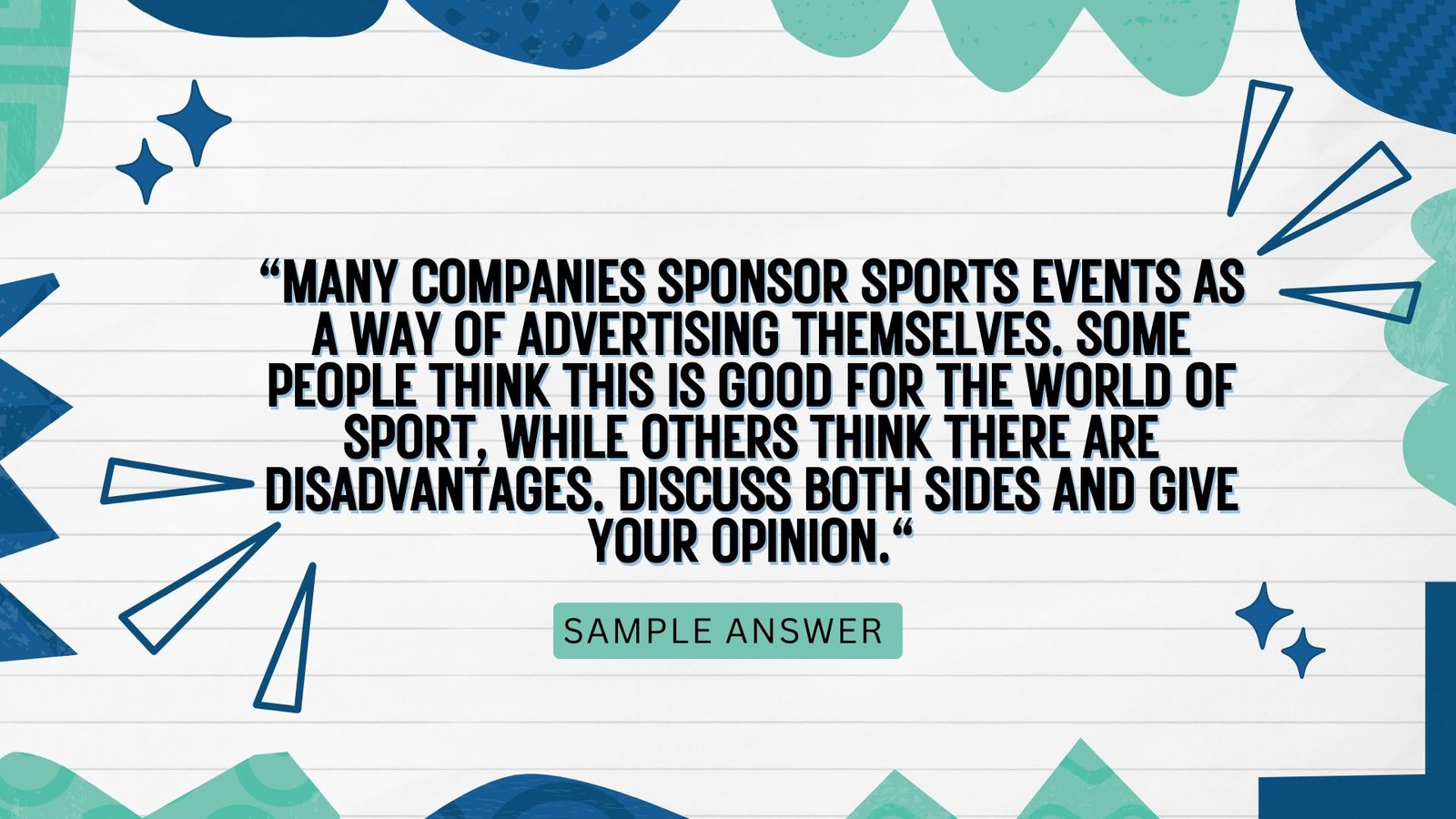
In the contemporary sporting landscape, corporate sponsorship has become a common advertising strategy, with companies investing heavily in major sports events. While some people believe this practice benefits the sporting world, others argue that it leads to excessive commercialisation. This essay will examine both perspectives before presenting my own view.
On the positive side, corporate sponsorship provides essential financial backing that supports the long-term sustainability of sports events. Funding from private companies helps organisers meet operational expenses, upgrade sporting infrastructure, and invest in athlete development programmes. As a result, events can achieve wider global exposure, increasing public engagement and encouraging greater participation in sports at both professional and grassroots levels.
However, there are notable drawbacks associated with heavy corporate involvement. One major concern is the commercialisation of sport, where profit-driven motives may overshadow core values such as fairness and sportsmanship. In some cases, sponsorship deals with alcohol, gambling, or fast-food brands raise ethical concerns, particularly due to their influence on young audiences. Furthermore, corporate sponsors tend to focus on high-profile competitions, leading to unequal funding distribution and the marginalisation of less popular sports.
In my opinion, sponsorship is largely beneficial when accompanied by strict regulatory oversight. While corporate investment is vital for the financial viability of modern sports, governing bodies must ensure that sponsorship agreements align with ethical standards and preserve the integrity of sport.
In conclusion, although corporate sponsorship enhances financial stability and global reach, it can also undermine sporting values if left unchecked. Therefore, a balanced approach that combines commercial support with effective regulation is essential.
HIGH-LEVEL COLLOCATIONS | HIGH-LEVEL VOCABULARY |
|---|---|
| corporate sponsorship | Commercialisation |
| essential financial backing | Sustainability |
| long-term sustainability | Viability |
| operational expenses | Marginalisation |
| sporting infrastructure | Oversight |
| wider global exposure | Integrity |
| profit-driven motives | Regulatory |
| ethical concerns | Exposure |
| unequal funding distribution | Allocation |
| integrity of sport | Ethical |