SAMPLE ANSWER
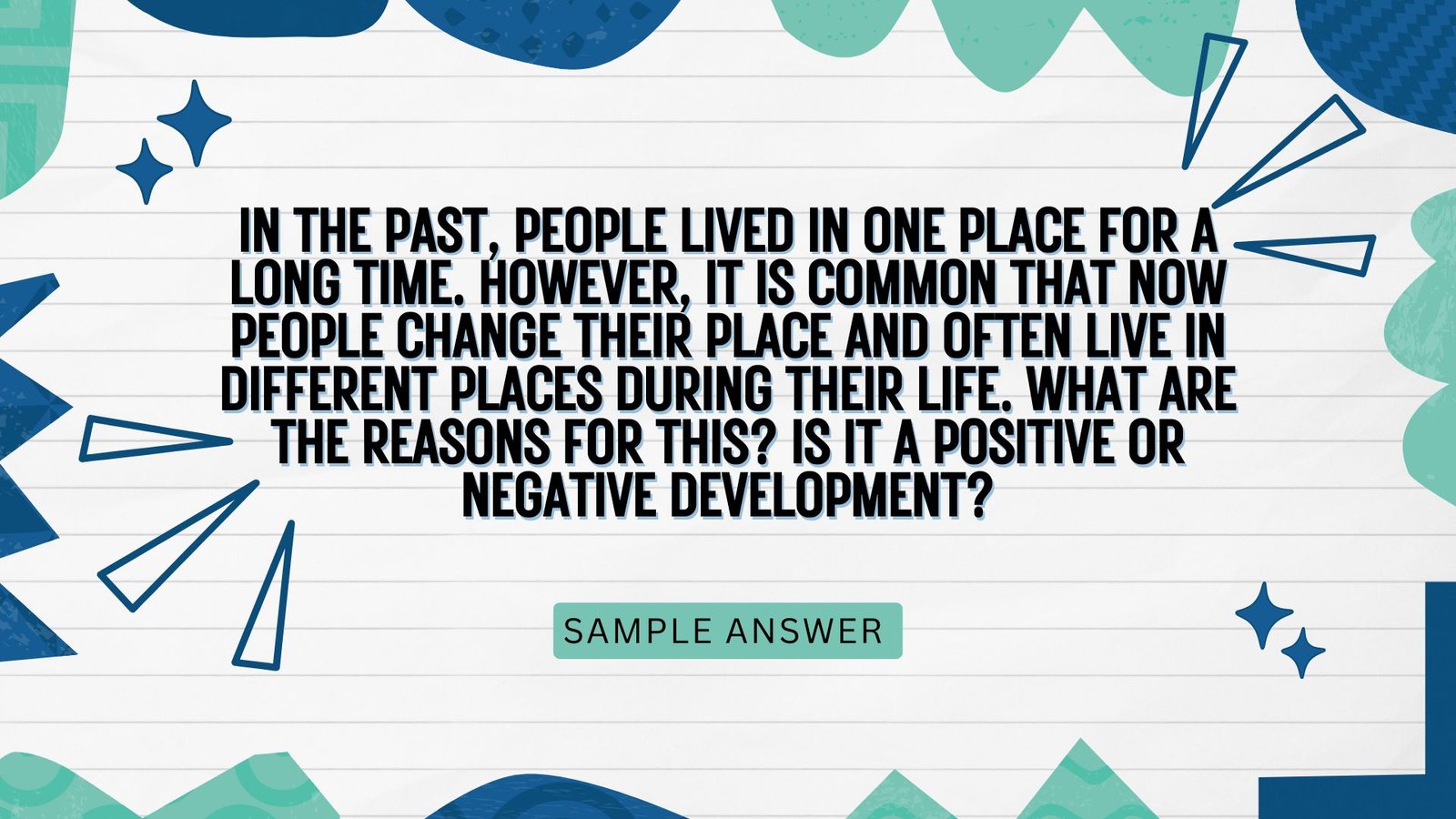
In previous generations, individuals tended to remain in the same place for most of their lives. However, it has now become increasingly common for people to relocate multiple times throughout their lifetime. This essay will outline the key reasons behind this trend and explain why it should largely be considered a positive development.
One significant reason for this shift is the transformation of the modern labour market. Today’s employment environment demands flexibility, and many people move to different cities or countries in search of better career prospects, higher incomes, or specialised professional opportunities. Additionally, globalisation has enabled multinational companies to operate across borders, encouraging employees to relocate more frequently for work assignments or promotions. A further reason is the pursuit of improved living conditions. Many individuals move to areas offering better education for their children, lower living costs, or enhanced public services. Younger generations, in particular, prioritise personal growth and experience, making them more willing to change their place of residence.
This trend can be regarded as broadly positive. Living in multiple locations enables people to gain exposure to diverse cultures, viewpoints, and lifestyles, which can foster adaptability and intercultural competence. Relocating also enhances personal development by encouraging independence, resilience, and problem-solving skills. From an economic perspective, increased mobility helps societies address workforce shortages in different regions, contributing to overall national productivity. Although frequent moves may weaken long-term community bonds, this drawback is relatively minor compared to the benefits of greater cultural awareness and improved economic opportunities.
In conclusion, people are changing their residence more often due to employment demands, lifestyle preferences, and opportunities created by globalisation. Despite some minor disadvantages, this trend is largely positive as it promotes personal development, cultural understanding, and economic flexibility.
High-Level Vocabulary | Useful Collocations |
|---|---|
| environmental fatigue | raise public awareness |
| conservation projects | act as a wake-up call |
| renewable energy breakthroughs | take responsibility |
| sustainable practices | adopt eco-friendly habits |
| alarming information | implement stricter regulations |
| environmental degradation | draw immediate attention |
| climate-related disasters | underestimate the seriousness |
| powerful tool for change | highlight urgent issues |
| public participation | foster long-term sustainability |
| policy implementation | counter negative perceptions |